For years, fast-casual dining dominated the restaurant industry. However, as dining trends continue to shift in early 2026, operators are beginning to reassess what truly drives long-term performance. Concepts like pizza franchises and community-based dine-in brands are beginning to show that now, not all fast-casual concepts are being viewed the same way.
Recent reporting from Nation’s Restaurant News highlights a challenge for fast-casual: consumers are rethinking what “value” really means. In many cases, guests are no longer satisfied with transactional, assembly-line formats when price points feel comparable. That shift is creating new opportunities for more experience-driven fast-casual concepts like Pizza Factory, where dine-in, takeout, and community connection all play a role in the guest experience.
Additionally, according to Placer.ai data, fast-casual visits among middle- to upper-middle-income consumers dipped throughout the second half of 2025. At the same time, brands built around highly standardized, build-your-own formats have faced traffic challenges and store closures, reinforcing a broader trend: consumers are becoming more selective about where and how they dine.
For multi-unit franchise investors, this moment presents a clear question: which types of fast-casual concepts are built to last, and how do brands like Pizza Factory fit into a more balanced, experience-driven portfolio?
Why Sit-Down Fast Casual is Winning Over Middle-Class Consumers
As value perception shifts, not all fast-casual concepts are impacted equally. On one end of the spectrum are highly transactional models: quick, efficient, but often interchangeable. On the other are sit-down fast-casual franchises that offer something more: space to gather, stay, and connect.
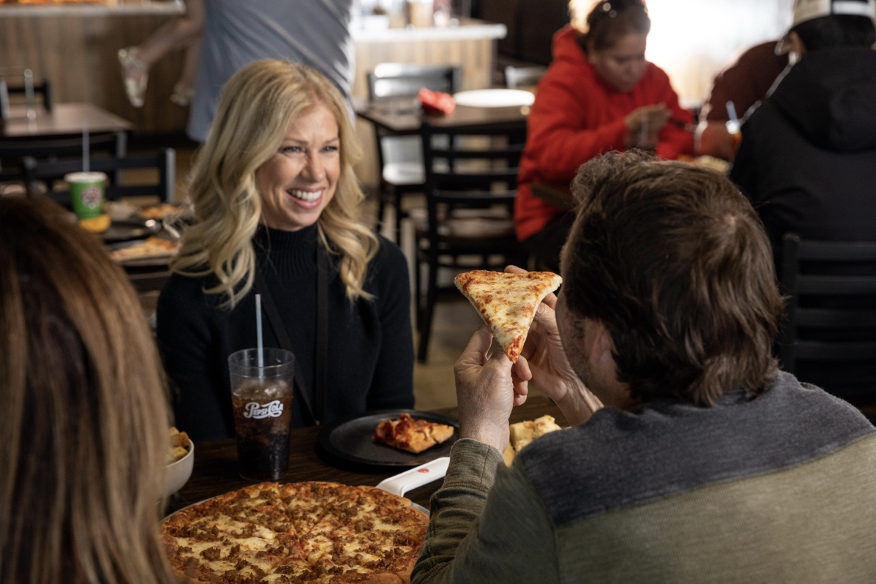
Pizza Factory falls into the latter category. While guests order at the counter, the experience doesn’t end there. Locations are designed to encourage people to sit, share a meal, and spend time together, which is something that’s becoming increasingly important to today’s consumer. In many of the West Coast communities where we operate, restaurants become go-to spots for:
- Family dinners and celebrations
- Youth sports team gatherings
- School fundraisers and community events
- Regular weekly dining traditions
For multi-unit operators, pizza franchises present a strategic opportunity. Adding a concept with a more welcoming environment can help diversify revenue streams and stabilize performance across a portfolio.
The Pizza Franchise Advantage
While restaurant trends evolve, pizza is a category that has remained relatively stable, compared to trendier or more volatile foods like chicken or salads. Pizza is a staple in American households, with demand that spans dine-in, takeout, and delivery. It’s flexible, shareable, and relevant across multiple occasions, from weeknight dinners to large group gatherings.
Pizza Factory’s model builds on that foundation with a format that goes beyond convenience:
- Dine-in, takeout, delivery, and catering all in one concept
- Lunch and dinner dayparts that complement morning-heavy brands like coffee or breakfast
- Fresh, in-house preparation, including hand-tossed dough and scratch-made sauce
- Community-centered dining rooms that drive repeat visits
In today’s environment, operators are looking for what lasts over trending tastes. Increasingly, that means prioritizing quality and experience over speed alone.
Value Perception: Not Just About Speed
One of the biggest shifts happening in the restaurant industry right now is how consumers define value. For years, fast-casual franchises have led by offering quick, customizable meals at a perceived premium to QSR. However, as prices have risen, the difference between fast-casual concepts has become less about cost, and more about experience.
Today, value is no longer just about convenience or cost, it’s about the total experience. Consumers are asking if the meal is worth their time, if the environment feels welcoming, and if they can connect with their friends and families there.
Pizza Factory has long operated on the belief that a restaurant should be more than a transaction. With features like open dining rooms, buffets in select locations, TVs, and local community engagement, the brand creates an environment where guests feel comfortable staying, connecting, and returning. As a brand, our restaurants are built to feel like part of the neighborhood, where guests return not just for the food, but for the hospitality.
Key Takeaways:
- Not all fast-casual is the same: transactional, assembly-line concepts are facing more pressure than experience-driven models
- Sit-down fast-casual creates differentiation: Pizza Factory blends efficiency with a community-focused dining experience
- Pizza remains a resilient category: consistent demand across dine-in, takeout, and delivery
If you’re evaluating how to evolve your portfolio in today’s changing market, it may be time to look beyond speed and invest in experience. Learn more about Pizza Factory franchising opportunities by filling out our inquiry form today!